Tractor Safety Training
Tractor safety training for farm, utility and construction crews: rollover protection, PTO hazards, hitching and a hands-on evaluation on your tractor.
What to Expect
Tractors look familiar, which is part of what makes them dangerous. Rollovers are the classic tractor fatality, often on a slope, a ditch bank or a road shoulder, and a tractor without a rollover protective structure (ROPS) or with the seat belt unbuckled leaves the operator nothing between them and the ground. Power take-off shafts, hitching and runovers cause most of the rest. Our course covers the tractor, the implements it runs and the ground it works on, then evaluates each operator on your equipment.
- Standards
- Agriculture: 29 CFR 1928.51 (ROPS and operating instructions) and 1928.57 (PTO guarding and machinery instructions). Construction: 1926.602(a) and 1926.1002 (ROPS for wheel-type agricultural and industrial tractors)
- Who needs it
- Farm, landscape, municipal, utility and construction employees who operate agricultural, utility or industrial tractors
- How often
- In agriculture, OSHA requires the operating instructions at initial assignment and at least annually after that
- Format
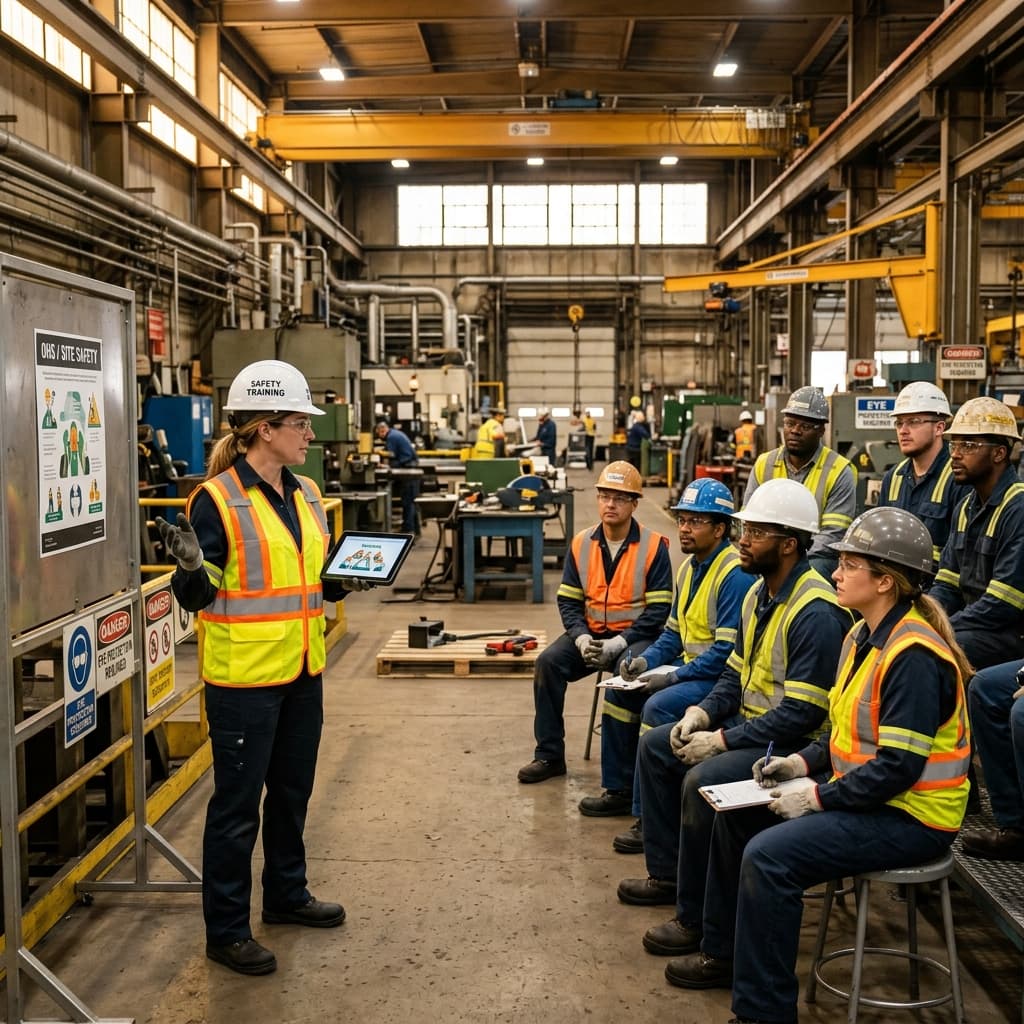
- Onsite at your job site, yard or facility, on your own equipment: classroom instruction, hands-on practice and an evaluation on the machine.
What OSHA requires for tractor operators
On farms, 29 CFR 1928.51 requires ROPS on agricultural tractors manufactured after October 25, 1976, and requires employers to go over the operating practices in Appendix A with every tractor operator at initial assignment and at least once a year. Those practices include buckling the seat belt on a ROPS tractor, staying away from ditches, embankments and holes, slowing down on turns and slopes, keeping off slopes too steep for safe operation, allowing no riders, and hitching only to the drawbar and the hitch points the manufacturer recommends. Section 1928.57 adds PTO guarding and instructions for servicing machinery safely. In construction, tractors are covered by the earthmoving equipment rules in 1926.602(a), and 1926.1002 sets the ROPS requirements.
Rollovers, PTO shafts and hitching
The course spends most of its time on what kills tractor operators. For rollovers, that means ground conditions, slopes, speed, raised loads on a front-end loader, and why the seat belt only works with a ROPS in place. For PTO work, it covers keeping shields and guards on, disengaging the PTO and shutting the engine off before anyone approaches a shaft or clears a clog. For hitching, it covers why hitching above the drawbar can flip a tractor backward, and backing to an implement with no one between the tractor and the hitch.
What the course covers
- Pre-operation inspection, including ROPS, seat belt, brakes, lights and SMV emblem
- Rollover prevention: slopes, ditches, embankments, speed and turning
- Front-end loader work and keeping loads low
- PTO shaft guarding, shields and the shutdown-before-service rule
- Hitching to the drawbar and approved hitch points
- Implements: three-point hitch, mowers and attachments
- Road travel, riders and working around bystanders
- Parking with brakes set, park lock engaged and implements lowered
- Covers OSHA 1928.51 Operating Instructions
- Rollover & ROPS Training
- PTO Hazard Awareness
- Hitching & Implement Safety
- Hands-On Evaluation
- Annual Refresher Ready
Trusted Since 2014
Disabled Veteran-Owned Small Business — serving clients nationwide.
Request a Free Consultation
Fill out the form below and we'll be in touch within one business day.
Other courses we deliver
- Skid Steer TrainingHands-on skid steer training at your site: pre-start inspection, attachments, stability on slopes and a practical evaluation on your own machine.
- Front End Loader TrainingGet certified in material handling, stockpile management, ramp operations, load-and-carry safety, and bucket controls.
- Backhoe TrainingMaster safe operation, digging, trenching, and backfilling techniques with hands-on practice and complete OSHA compliance evaluations.

What Our Clients Said
- Expert Safety Training
- Customized Safety Programs
- OSHA Compliance Support
- Industrial Hygiene Surveys
- Onsite Safety Inspections
- Written Safety Program Development
“Brad and his team are very helpful and knowledgeable. They came to our job site and conducted safety training that was not only thorough and compliant, but genuinely engaging for our crew. I highly recommend BHG Heavy Equipment to any company that takes workplace safety seriously.”
Tractor Training Questions
We get a lot of the same great questions from new clients. Here are the answers to the ones we hear most often — if yours isn't listed, don't hesitate to reach out directly.
Onsite Safety Training Session