Telehandler Operator Training
Telehandler training built on OSHA's forklift rule, 1910.178(l): load charts, boom stability, rough terrain and a practical evaluation on your machine.
What to Expect
A telehandler is a rough-terrain forklift with a telescoping boom, and it behaves very differently from a warehouse forklift. Capacity drops fast as the boom extends, ground conditions and slopes change stability, and attachments change the load chart. OSHA treats telehandlers as powered industrial trucks, so operators need formal instruction, practical training and a workplace evaluation. We deliver all three on your machine.
- Standards
- 29 CFR 1910.178(l), which 1926.602(d) applies to construction; rough-terrain forklifts are built to ASME B56.6
- Who needs it
- Anyone who operates a telehandler or rough-terrain forklift, on construction sites, farms or industrial yards
- Re-evaluation
- At least once every three years, and sooner after an incident, a near miss, unsafe operation or a change in truck type or conditions
- Format
- Onsite at your job site, yard or facility, on your own equipment: classroom instruction, hands-on practice and an evaluation on the machine.
What the forklift standard requires
Under 1910.178(l), training must combine formal instruction, practical training and an evaluation of the operator's performance in the workplace, and no one may operate a truck on their own until they have completed it. The employer must certify each operator with the operator's name, the dates of training and evaluation, and who did them. Evaluations repeat at least every three years. OSHA's construction rule, 1926.602(d), makes those requirements identical for construction work.
Load charts, attachments and suspended loads
The load chart is the center of telehandler training: capacity depends on boom angle, extension and the attachment, so a load that is safe close in can tip the machine at full reach. Operators practice reading the chart for your attachments, keeping the frame level, and traveling with the boom low. Using a telehandler to hoist and move a suspended load with a winch or hook brings it under OSHA's crane standard (1926.1400(c)(8)), which has its own operator requirements, so we cover where that line is.
What the course covers
- Pre-shift inspection and reporting defects
- Reading and applying the load chart for each attachment
- Boom angle, extension and the stability triangle
- Frame leveling, outriggers and rough or sloped ground
- Traveling with the boom low and the load visible
- Attachments, quick couplers and the limits on lifting people
- When suspended-load work falls under the crane standard
- Practical evaluation on your telehandler
- Meets 1910.178(l) Training Requirements
- Load Chart Training
- Rough-Terrain Stability
- Practical Workplace Evaluation
- Written Certification Details
- Trained on Your Machine
Trusted Since 2014
Disabled Veteran-Owned Small Business — serving clients nationwide.
Request a Free Consultation
Fill out the form below and we'll be in touch within one business day.
Other courses we deliver
- Aerial Lift TrainingMEWP operator training for scissor lifts and boom lifts, built on ANSI A92.22 and A92.24 and the OSHA rules, with hands-on evaluation on your lifts.
- Skid Steer TrainingHands-on skid steer training at your site: pre-start inspection, attachments, stability on slopes and a practical evaluation on your own machine.
- Front End Loader TrainingGet certified in material handling, stockpile management, ramp operations, load-and-carry safety, and bucket controls.
What Our Clients Said
- Expert Safety Training
- Customized Safety Programs
- OSHA Compliance Support
- Industrial Hygiene Surveys
- Onsite Safety Inspections
- Written Safety Program Development
“Brad and his team are very helpful and knowledgeable. They came to our job site and conducted safety training that was not only thorough and compliant, but genuinely engaging for our crew. I highly recommend BHG Heavy Equipment to any company that takes workplace safety seriously.”
Telehandler Training Questions
We get a lot of the same great questions from new clients. Here are the answers to the ones we hear most often — if yours isn't listed, don't hesitate to reach out directly.
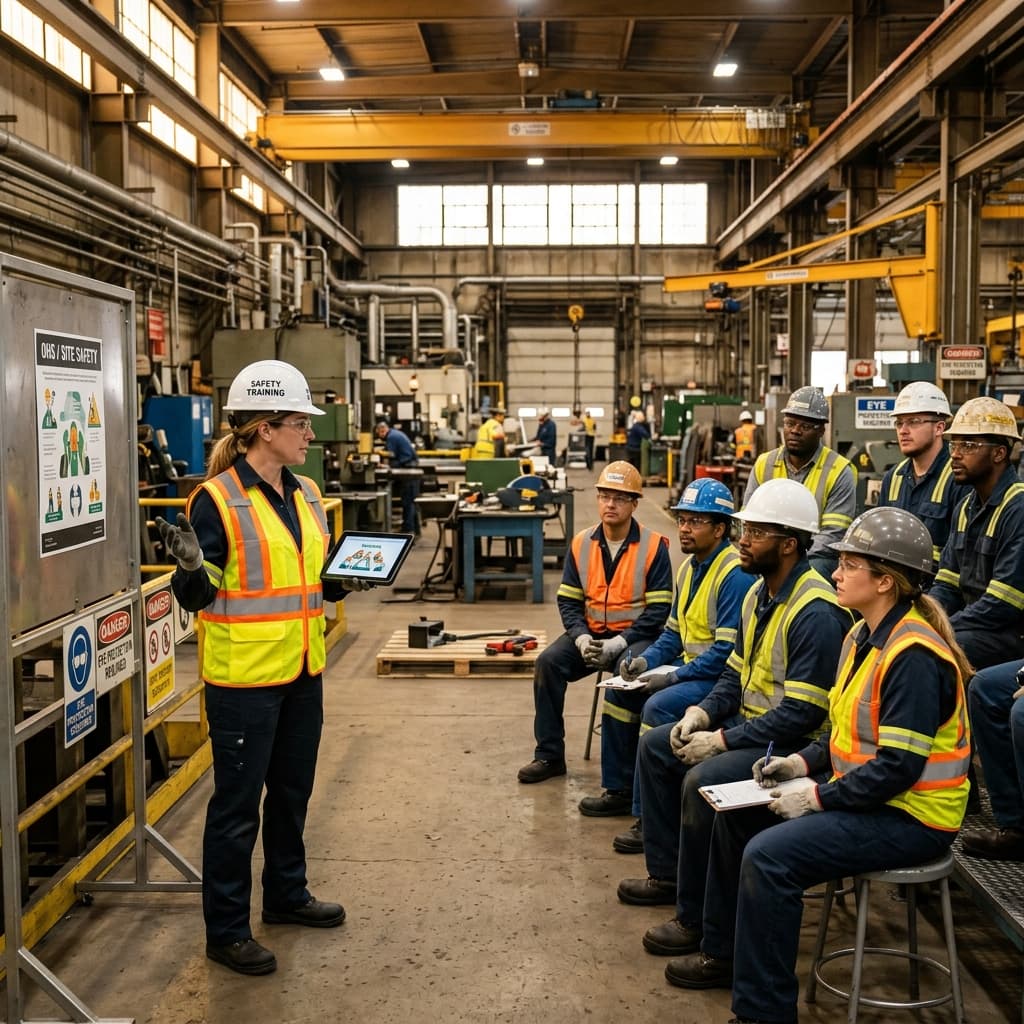
Onsite Safety Training Session