Heavy Equipment Operator Training in Houston, Texas
Operator training for Houston crews digging detention basins, rebuilding freeways and working plant sites on Gulf Coast clay, taught at your yard or job site on your own machines.
- OSHA-Aligned Training
- Onsite at Your Job Site
- Hands-On, on Your Machines
- No Long-Term Contracts
Heavy Equipment Work in Houston
A lot of Houston's heavy equipment work is about moving water. Harris County voters approved $2.5 billion in flood control bonds in August 2018, and the Harris County Flood Control District's capital projects widen bayous and drainage channels and excavate stormwater detention basins. That means excavators and dozers working channel banks and basin side slopes, with haul trucks cycling in and out of neighborhoods.
The ground itself is part of the job. Much of the Houston area sits on clays of the Beaumont Formation, such as the Lake Charles series, which the USDA describes as very slowly permeable soils that open cracks up to about 2 inches wide at the surface when dry. A trench cut in that clay can look solid in the morning and behave very differently after a Gulf storm. Add TxDOT's North Houston Highway Improvement Project on I-45 and the plants and pipelines along the Ship Channel, and the region keeps a wide mix of operators busy.
BHG Heavy Equipment, a Disabled Veteran-Owned company based in Hannibal, Missouri, travels to Houston-area yards, plants and job sites to train operators on the machines they already run. Each course combines classroom instruction with hands-on operation, pre-shift inspections and the OSHA rules for that equipment, and every operator is evaluated on the machine.
Where Heavy Equipment Works in Houston
Flood control channels and detention basins
The Harris County Flood Control District's 2018 Bond Program funds projects that increase conveyance in bayous and drainage channels or excavate stormwater detention basins. Equipment on wet channel banks and basin slopes risks rollovers and sliding, and haul trucks backing on tight access roads create struck-by hazards for ground crews.
Highway reconstruction
TxDOT's North Houston Highway Improvement Project rebuilds I-45 from downtown to Beltway 8 North and realigns I-10 and US 59/I-69 around downtown, starting with drainage work along St. Emanuel Street. Operators work beside live traffic, near existing storm and utility lines, and among crews on foot inside tight work zones.
Refinery, petrochemical and pipeline construction
The Greater Houston Partnership reports the region holds 15.3% of U.S. refining capacity and the world's largest petrochemical complex along the Houston Ship Channel. Site work inside operating plants and along pipeline corridors puts buckets close to buried pressurized lines, where a utility strike can mean a fire or release.
What Shapes Equipment Work in Houston
Texas does not run an OSHA State Plan for private employers, so Houston contractors fall under federal OSHA and the construction standards in 29 CFR 1926, including the excavation rules in Subpart P.
Clay soils such as the Lake Charles series, formed in Beaumont Formation deposits, crack when they dry out. Under OSHA's soil classification in Appendix A to Subpart P, fissured soil cannot be classed as Type A, which affects the slope or protective system a trench needs.
The Atlantic hurricane season runs June 1 to November 30. Heavy rain saturates trench walls and basin slopes, softens haul roads and can flood open excavations, so work after a storm should start with an inspection of the excavation by a competent person.
Texas Utilities Code Sec. 251.151 includes a Saturday rule: an excavator who notifies on a Saturday may start the following Tuesday at 11:59 a.m., or Wednesday if Monday is a holiday.
Operator Courses for Houston Job Sites
All courses- Excavator TrainingComprehensive instruction on machine stability, deep excavation safety, trenching, rigging, and precision attachment controls.
- Bulldozer TrainingLearn advanced grading, slot dozing, and land clearing operations alongside safety protocols for handling heavy loads and slopes.
- Dump Truck TrainingCovers pre-trip inspections, safe hauling, backing maneuvers, dump procedures on unstable ground, and road transit safety.
- Front End Loader TrainingGet certified in material handling, stockpile management, ramp operations, load-and-carry safety, and bucket controls.
Houston Equipment Training Questions
We get a lot of the same great questions from new clients. Here are the answers to the ones we hear most often — if yours isn't listed, don't hesitate to reach out directly.
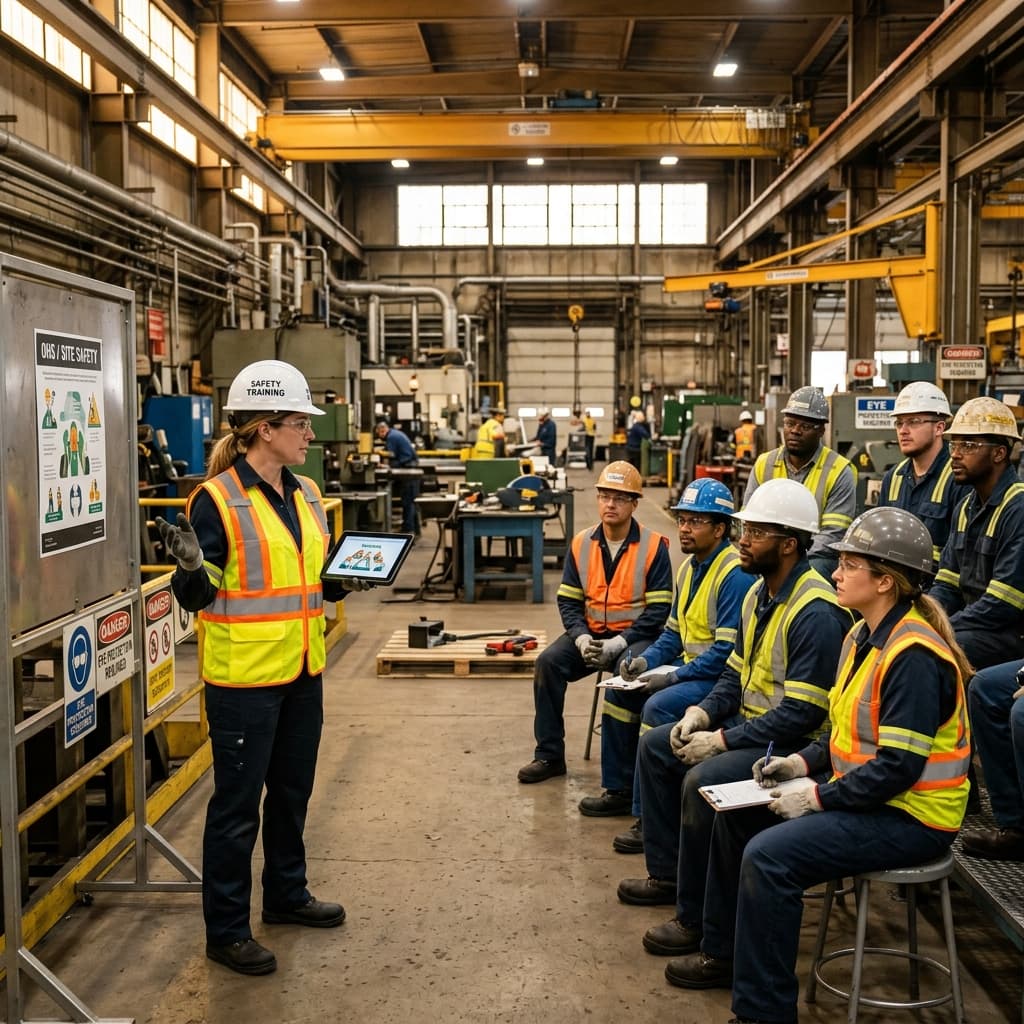
Onsite Safety Training Session
Practical Training. Proven Safety.
BHG Heavy Equipment delivers no-nonsense, on-site heavy equipment training that fits how your crews actually work. We combine OSHA-compliant curriculum with real machines and real jobsite scenarios so operators leave confident, competent, and certified.
From single-day refreshers to full new-hire onboarding, we tailor each session to your equipment, hazards, and production goals. You get fewer incidents, faster ramp-ups, and clean documentation for compliance audits.
- On-site, hands-on instruction
- OSHA 1910/1926 compliant curriculum
- Practical evaluations on your equipment
- Tailored to your tasks & hazards
Get in Contact with us Here!
Fill out the form below and we'll be in touch within one business day.