Heavy Equipment Operator Training in Oklahoma City, Oklahoma
Operator training for Oklahoma City crews rebuilding streets, widening turnpikes and building well pads, taught at your yard or job site on your own machines.
- OSHA-Aligned Training
- Onsite at Your Job Site
- Hands-On, on Your Machines
- No Long-Term Contracts
Heavy Equipment Work in Oklahoma City
Oklahoma City has a decade of street work ahead of it. On October 14, 2025, voters approved a $2.7 billion general obligation bond with 547 projects, including $1.35 billion for streets, 25 bridge projects and 44 drainage improvement projects, with construction expected from 2026 through about 2036. Resurfacing, widening and drainage jobs mean graders, loaders, backhoes and dump trucks working on and beside city streets, often with traffic running past.
Oil and gas is still part of the city's ground. The Oklahoma City Field was discovered in 1928, and by 1935 the governor declared martial law in a dispute over drill sites around the State Capitol. The City still issues its own oil and gas well permits for drilling inside city limits. Pad construction, lease roads and pipeline work bring equipment close to buried gathering and product lines, which is why Oklahoma's dig law has specific rules for hydrocarbon and hazardous liquid lines.
BHG Heavy Equipment, a Disabled Veteran-Owned company based in Hannibal, Missouri, travels to Oklahoma City-area yards and job sites to train operators on the machines they already run. Each course combines classroom instruction with hands-on operation, pre-shift inspections and the OSHA rules for that equipment, and every operator is evaluated on the machine.
Where Heavy Equipment Works in Oklahoma City
City street, bridge and drainage work
The 2025 bond funds hundreds of arterial and residential resurfacing and widening projects, plus bridges and drainage, and MAPS 4 is adding sidewalks citywide. Crews work in traffic work zones, around buried water, sewer and gas lines, and with trucks and loaders backing near people on foot.
Turnpike widening and new routes
The Oklahoma Turnpike Authority's ACCESS Oklahoma plan, a $5 billion, 15-year program, includes widening the John Kilpatrick Turnpike and building reliever routes around the Oklahoma City metro. Mass grading and bridge work bring dozer and scraper traffic on steep fill slopes, haul truck movements and operators working beside live lanes.
Oil and gas pads, lease roads and pipelines
Drilling inside Oklahoma City requires a City oil and gas well permit in addition to the Oklahoma Corporation Commission's oil and gas rules. Building pads and lease roads and trenching for flowlines put buckets near pressurized lines, where a strike can release gas or liquids.
What Shapes Equipment Work in Oklahoma City
Oklahoma does not run an OSHA State Plan for private employers, so Oklahoma City contractors fall under federal OSHA and the construction standards in 29 CFR 1926.
Under 63 O.S. Sec. 142.6, an excavator must check for a positive response from every notified operator before digging, and must not dig where it knows of unmarked hydrocarbon or hazardous liquid lines until they are marked. OKIE811 says locate requests are valid for 14 calendar days.
The National Weather Service office in Norman lists 194 tornadoes in the immediate Oklahoma City area since 1890. Crews running equipment in open cuts and on fill slopes need a plan for where to go and how to shut down when a warning is issued.
Operator Courses for Oklahoma City Job Sites
All courses- Excavator TrainingComprehensive instruction on machine stability, deep excavation safety, trenching, rigging, and precision attachment controls.
- Backhoe TrainingMaster safe operation, digging, trenching, and backfilling techniques with hands-on practice and complete OSHA compliance evaluations.
- Grader TrainingAdvanced training in grading techniques, leveling, ditching, slope maintenance, and high-precision blade configuration safety.
- Dump Truck TrainingCovers pre-trip inspections, safe hauling, backing maneuvers, dump procedures on unstable ground, and road transit safety.
Oklahoma City Equipment Training Questions
We get a lot of the same great questions from new clients. Here are the answers to the ones we hear most often — if yours isn't listed, don't hesitate to reach out directly.
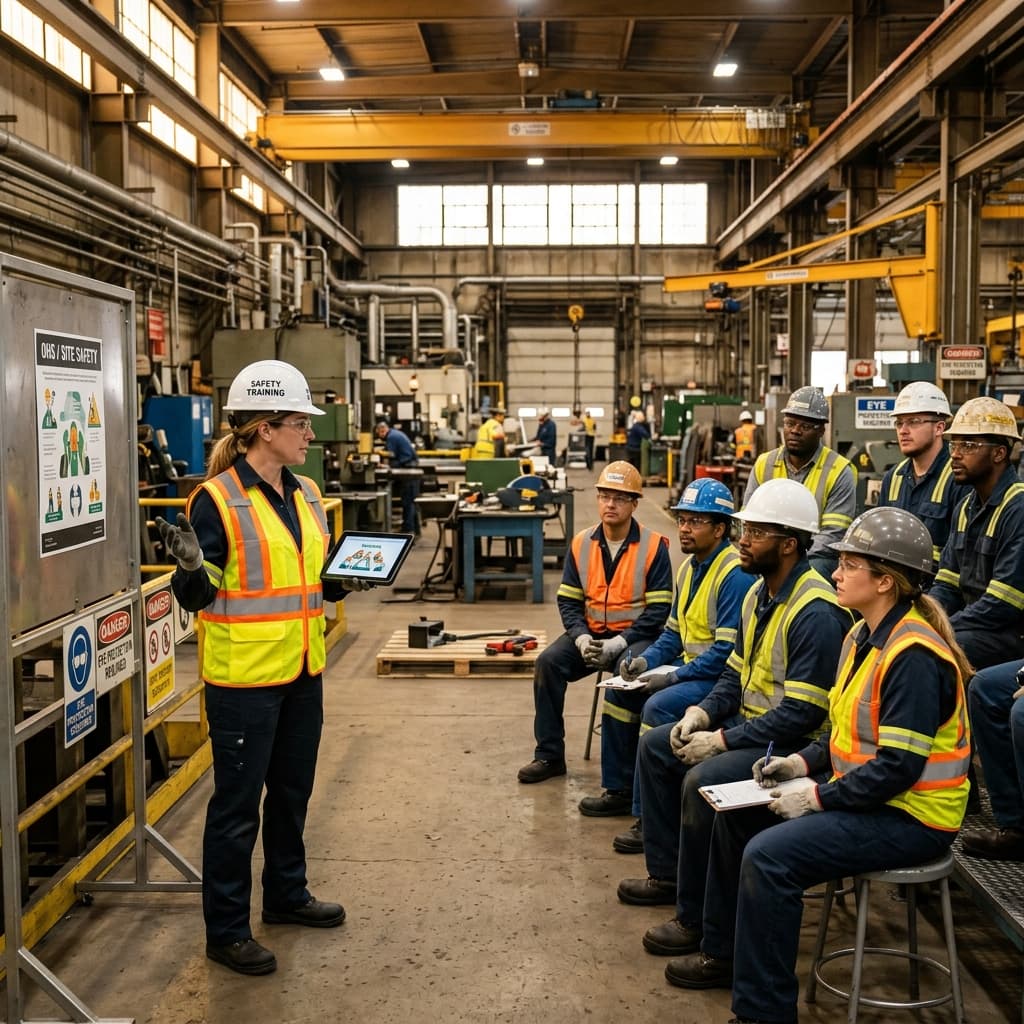
Onsite Safety Training Session
Practical Training. Proven Safety.
BHG Heavy Equipment delivers no-nonsense, on-site heavy equipment training that fits how your crews actually work. We combine OSHA-compliant curriculum with real machines and real jobsite scenarios so operators leave confident, competent, and certified.
From single-day refreshers to full new-hire onboarding, we tailor each session to your equipment, hazards, and production goals. You get fewer incidents, faster ramp-ups, and clean documentation for compliance audits.
- On-site, hands-on instruction
- OSHA 1910/1926 compliant curriculum
- Practical evaluations on your equipment
- Tailored to your tasks & hazards
Get in Contact with us Here!
Fill out the form below and we'll be in touch within one business day.