Heavy Equipment Operator Training in Omaha, Nebraska
Heavy equipment operator training at your Omaha yard or job site, on your own machines, for crews working sewer separation, interstate widening and site development.
- OSHA-Aligned Training
- Onsite at Your Job Site
- Hands-On, on Your Machines
- No Long-Term Contracts
Heavy Equipment Work in Omaha
A lot of Omaha's heavy equipment work is underground. The City of Omaha Public Works Department's combined sewer overflow program, Clean Solutions for Omaha, is made up of nearly 60 projects to capture or treat 85% of the average annual combined sewage volume, with work running in phases until 2037. Sewer separation means long trenches in built-up streets, where cave-ins, utility strikes and traffic around the excavator are the risks that matter.
Above ground, the Nebraska Department of Transportation has been widening and repairing I-80 through Douglas and Sarpy counties under the Metro Area Travel Improvement Study, and data center development in Sarpy County keeps grading and utility crews busy. Private employers in Nebraska are covered by federal OSHA's Omaha Area Office. Across the Missouri River, Council Bluffs is in Iowa, where Iowa OSHA and Iowa One Call apply instead.
BHG Heavy Equipment is a Disabled Veteran-Owned company based in Hannibal, Missouri. We travel to your site and train operators on the excavators, backhoes, loaders and trucks they run every day, combining classroom instruction with pre-shift inspections, the OSHA rules for each machine and hands-on operation, with an evaluation on the machine. Call (573) 822-6448 to set up training for your Omaha crew.
Where Heavy Equipment Works in Omaha
Sewer separation and underground utilities
Clean Solutions for Omaha ranges from sewer separation projects to high-rate treatment facilities. Backhoe and excavator operators digging in streets face trench cave-ins, strikes on gas, water and fiber lines, and struck-by hazards from the machine's swing radius and passing traffic.
Interstate widening and bridge work
NDOT's first Metro Area Travel Improvement Study projects widened westbound I-80 from Q Street to Giles Road and on to 144th Street (Nebraska Highway 50), with bridge repairs over West Papillion and South Papillion creeks. Crews in these work zones deal with live traffic, dump truck backing and night work.
Data center and site development
The Greater Omaha Chamber reports Google's 275-acre data center campus in Papillion and more than $2.5 billion invested in its Council Bluffs data center operation since 2007. Mass grading and utility trenching on sites this size bring rollover on cut slopes, backing incidents among haul trucks and utility strikes.
What Shapes Equipment Work in Omaha
The Loess Hills run the full length of the Missouri River valley in western Iowa, including the bluffs at Council Bluffs. The Iowa Geological Survey notes that loess, a wind-blown silt, stands in near-vertical faces when dry but is vulnerable to collapse when wet, so a cut or trench wall in it that looks solid can fail after rain or a water line leak.
Crews that work both sides of the river change rules at the state line. On the Nebraska side it is federal OSHA and Nebraska811 with two full business days' notice; in Council Bluffs it is Iowa OSHA and Iowa One Call, whose 48-hour period starts at 6:00 a.m. the next business day (Iowa Code 480.1 and 480.4).
Operator Courses for Omaha Job Sites
All courses- Excavator TrainingComprehensive instruction on machine stability, deep excavation safety, trenching, rigging, and precision attachment controls.
- Backhoe TrainingMaster safe operation, digging, trenching, and backfilling techniques with hands-on practice and complete OSHA compliance evaluations.
- Dump Truck TrainingCovers pre-trip inspections, safe hauling, backing maneuvers, dump procedures on unstable ground, and road transit safety.
- Front End Loader TrainingGet certified in material handling, stockpile management, ramp operations, load-and-carry safety, and bucket controls.
Omaha Equipment Training Questions
We get a lot of the same great questions from new clients. Here are the answers to the ones we hear most often — if yours isn't listed, don't hesitate to reach out directly.
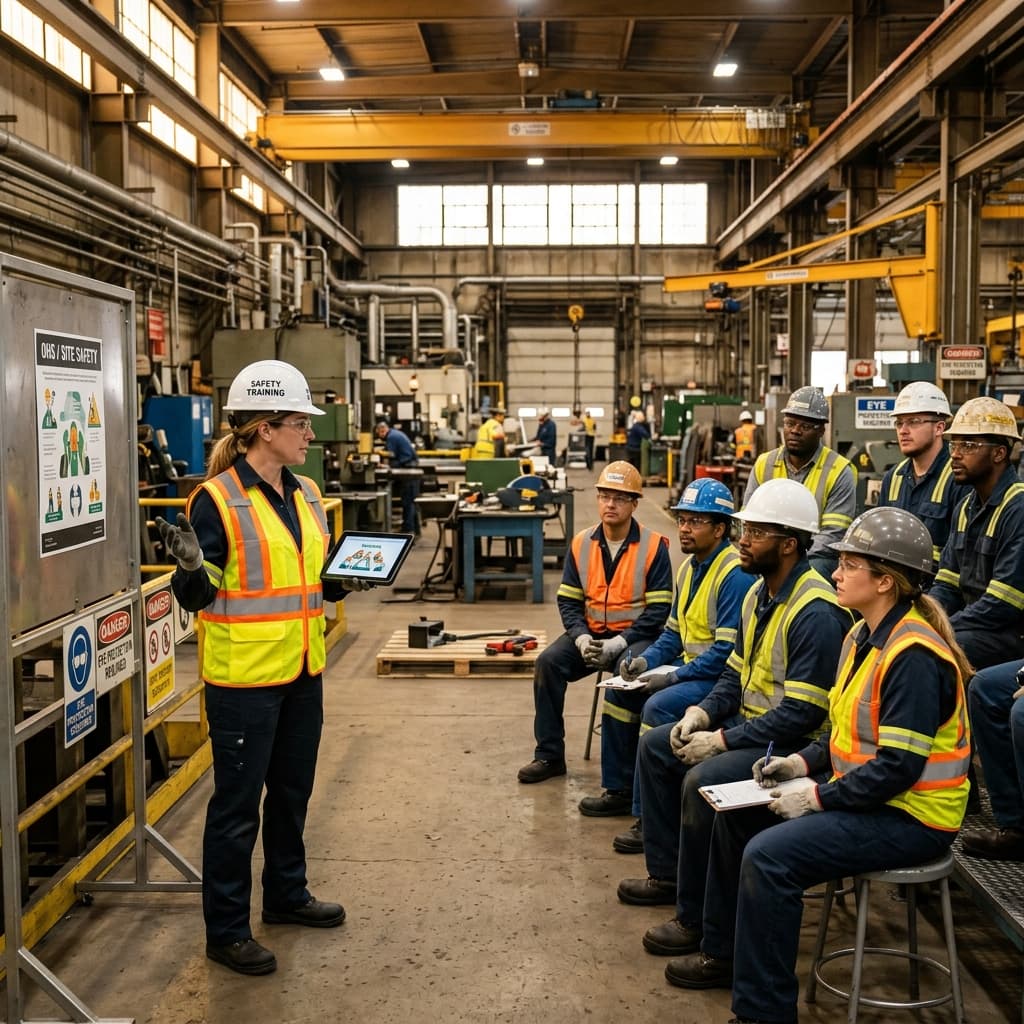
Onsite Safety Training Session
Practical Training. Proven Safety.
BHG Heavy Equipment delivers no-nonsense, on-site heavy equipment training that fits how your crews actually work. We combine OSHA-compliant curriculum with real machines and real jobsite scenarios so operators leave confident, competent, and certified.
From single-day refreshers to full new-hire onboarding, we tailor each session to your equipment, hazards, and production goals. You get fewer incidents, faster ramp-ups, and clean documentation for compliance audits.
- On-site, hands-on instruction
- OSHA 1910/1926 compliant curriculum
- Practical evaluations on your equipment
- Tailored to your tasks & hazards
Get in Contact with us Here!
Fill out the form below and we'll be in touch within one business day.