Heavy Equipment Operator Training in St. Louis, Missouri
Heavy equipment operator training for St. Louis crews working MSD sewer projects, MoDOT interstate jobs and bulk terminals on the Mississippi, taught at your site on your machines.
- OSHA-Aligned Training
- Onsite at Your Job Site
- Hands-On, on Your Machines
- No Long-Term Contracts
Heavy Equipment Work in St. Louis
A lot of the heavy equipment work in St. Louis happens underground or next to traffic. The Metropolitan St. Louis Sewer District is partway through MSD Project Clear, a $6 billion, 28-year program under an agreement with the U.S. Environmental Protection Agency and the Missouri Coalition for the Environment, which includes deep storage tunnels and new sewer lines. MoDOT's St. Louis District said it would start roughly 18 bridge projects in 2026, alongside continuing work on I-270 in north St. Louis County and on I-55 and I-44. On the riverfront, barge terminals handle bulk cargo such as limestone, salt, scrap and grain.
Each of those jobs puts operators in a different spot: excavators and backhoes working trenches and shafts, loaders and dump trucks moving in tight lanes beside traffic, and machines working stockpiles along the river. BHG Heavy Equipment trains operators for that work at the job site or yard, on the machines they run every day. Courses combine classroom instruction with hands-on operation, pre-shift inspections and the OSHA rules for each machine, and each operator is evaluated on the machine.
BHG is a Disabled Veteran-Owned company based in Hannibal, Missouri, and travels to clients across 17 states. Missouri is a federal OSHA state, so private employers in St. Louis City and St. Louis County are under federal OSHA's St. Louis Area Office. Contractors who also work the Illinois side of the river deal with a different OSHA office and a different one-call center there.
Where Heavy Equipment Works in St. Louis
Sewer tunnels and storage (MSD Project Clear)
MSD Project Clear includes the Deer Creek, Jefferson Barracks, Lower Meramec and Maline Creek tunnel and storage projects, the River Des Peres storage tunnel, and a long-running sewer repair program. Shaft sites and sewer trenches put excavators and backhoes next to cave-in hazards, buried utilities and workers on foot.
Interstate and bridge construction
MoDOT's 2026 St. Louis work list includes added lanes and bridge replacements on I-270 from Lilac Avenue to west of Route H, I-55 bridge rehabilitation at the Meramec River and I-44 pavement repairs in St. Louis and Franklin counties. Loaders, graders and dump trucks work beside live traffic, so work-zone struck-by and backing hazards come with the job.
Riverfront bulk terminals
The city's Municipal River Terminal, north of the I-70 Mississippi River bridge, handles bulk cargo including limestone, salt, sand, scrap metal, pig iron and grain, and the Port of Metropolitan St. Louis runs 70 miles along both banks. Front-end loaders and dozers working stockpiles and dock edges face rollover, drop-off and struck-by hazards.
What Shapes Equipment Work in St. Louis
Missouri has no state OSHA plan for private employers. Federal OSHA standards apply, including 29 CFR 1926.602 for earthmoving equipment and 29 CFR 1926 Subpart P for excavations.
Missouri 811 locate tickets are valid for 21 calendar days from the start date on the request. Longer jobs, or marks that have faded, need a renewal ticket.
The National Weather Service sets flood stage for the Mississippi River at the St. Louis gauge at 30 feet, with moderate flooding at 35 feet. High water affects riverfront terminals, low-lying yards and access roads near the river.
Across the river in Illinois, locate requests go to JULIE instead of Missouri 811, and OSHA's Fairview Heights Area Office handles Metro East sites.
Operator Courses for St. Louis Job Sites
All courses- Excavator TrainingComprehensive instruction on machine stability, deep excavation safety, trenching, rigging, and precision attachment controls.
- Backhoe TrainingMaster safe operation, digging, trenching, and backfilling techniques with hands-on practice and complete OSHA compliance evaluations.
- Front End Loader TrainingGet certified in material handling, stockpile management, ramp operations, load-and-carry safety, and bucket controls.
- Dump Truck TrainingCovers pre-trip inspections, safe hauling, backing maneuvers, dump procedures on unstable ground, and road transit safety.
St. Louis Equipment Training Questions
We get a lot of the same great questions from new clients. Here are the answers to the ones we hear most often — if yours isn't listed, don't hesitate to reach out directly.
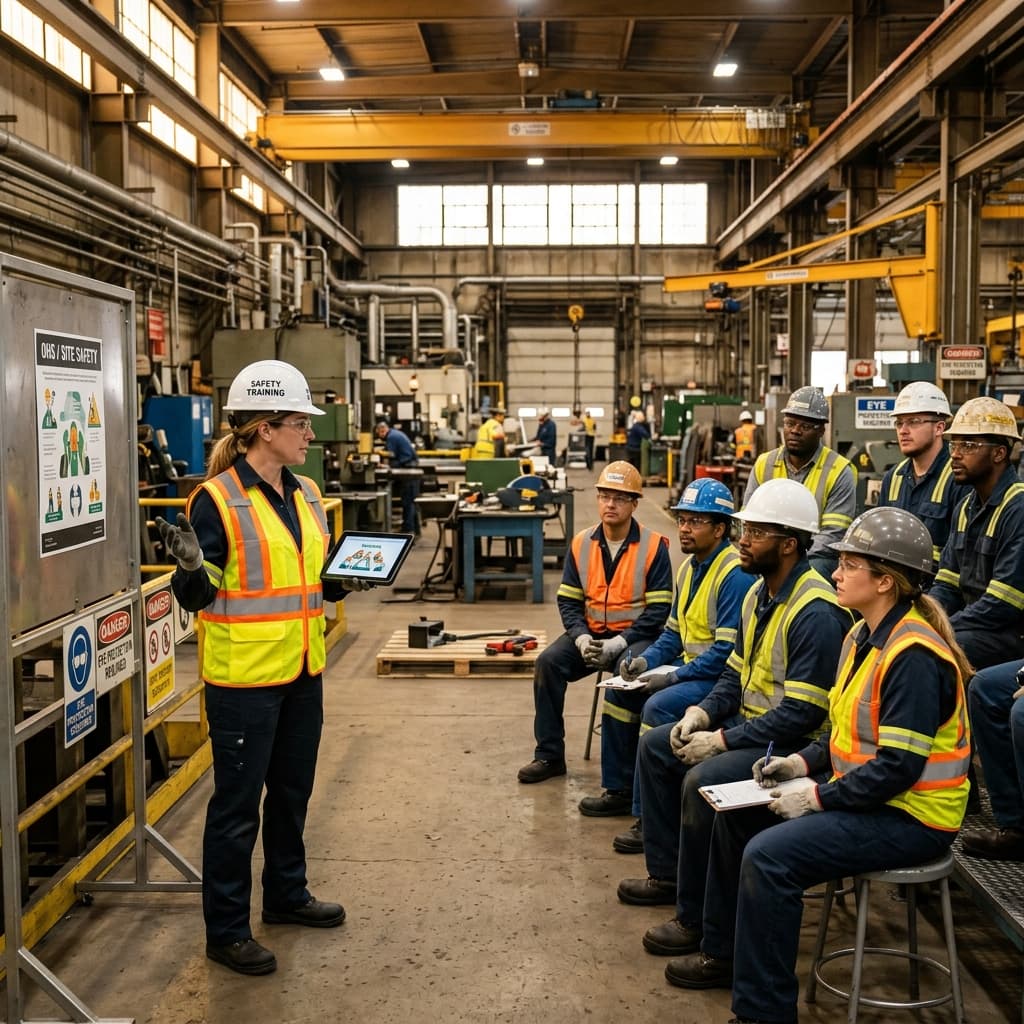
Onsite Safety Training Session
Practical Training. Proven Safety.
BHG Heavy Equipment delivers no-nonsense, on-site heavy equipment training that fits how your crews actually work. We combine OSHA-compliant curriculum with real machines and real jobsite scenarios so operators leave confident, competent, and certified.
From single-day refreshers to full new-hire onboarding, we tailor each session to your equipment, hazards, and production goals. You get fewer incidents, faster ramp-ups, and clean documentation for compliance audits.
- On-site, hands-on instruction
- OSHA 1910/1926 compliant curriculum
- Practical evaluations on your equipment
- Tailored to your tasks & hazards
Get in Contact with us Here!
Fill out the form below and we'll be in touch within one business day.