Heavy Equipment Operator Training in New Orleans, Louisiana
In New Orleans, equipment works behind levees, below sea level and in ground that holds water. BHG Heavy Equipment trains your operators onsite, on your own machines, for those conditions.
- OSHA-Aligned Training
- Onsite at Your Job Site
- Hands-On, on Your Machines
- No Long-Term Contracts
Heavy Equipment Work in New Orleans
Large parts of New Orleans sit below sea level inside the Hurricane and Storm Damage Risk Reduction System, the $14.6 billion network of levees, floodwalls, floodgates, surge barriers and pump stations that the U.S. Army Corps of Engineers built after Hurricane Katrina and turned over to local flood protection authorities to run and maintain. Keeping that system, the city's drainage and its streets in working order is steady work for excavators, dozers, loaders and dump trucks.
Inside the city, the Department of Public Works and the Sewerage & Water Board are carrying out a program of more than $2.3 billion in road, drainage and underground utility work, including the roughly $2 billion FEMA-funded Joint Infrastructure Recovery Roads program. Downriver in St. Bernard Parish, the U.S. Army Corps of Engineers granted the federal permit for Port NOLA's Louisiana International Terminal container port in August 2026. Across all of this work, the same hazards keep coming up: trenches in saturated soil, buried utilities, and heavy trucks and machines working next to traffic and water.
BHG Heavy Equipment is a Disabled Veteran-Owned company based in Hannibal, Missouri. We travel to your yard or job site in the New Orleans area and train operators on the machines they run every day. Each course combines classroom instruction with hands-on operation, pre-shift inspections and the OSHA rules for that equipment, and every operator is evaluated on the machine.
Where Heavy Equipment Works in New Orleans
Levee and flood protection
The levees, floodwalls, floodgates and surge barriers protecting Orleans, Jefferson and St. Bernard parishes are now operated and maintained by local agencies such as the Flood Protection Authority-East. Dozers and excavators working on levee slopes and crowns face rollover risk on side slopes and soft crests, plus struck-by hazards where haul trucks and ground crews share narrow levee roads.
Street, drainage and utility rebuilding
The City and the Sewerage & Water Board's program of nearly 200 projects rebuilds streets together with the drainage lines and underground utilities beneath them. Trench cave-ins in wet soil, strikes on gas and water lines, and backing incidents in tight residential streets open to traffic are the main exposures.
Port and terminal construction
With its federal permit granted in August 2026, the Louisiana International Terminal in St. Bernard Parish is moving toward construction as a new deepwater container terminal on the Mississippi River. Large site-preparation jobs like this bring high-volume dump truck haul routes, loaders feeding trucks, and earthwork next to the river.
What Shapes Equipment Work in New Orleans
Much of the ground here is low, wet and still settling. The USGS reports that parts of New Orleans and nearby areas already lie 1.5 to 3 meters below mean sea level, and a NASA study found that groundwater pumping and dewatering are major causes of the ongoing sinking. Under OSHA's excavation rules, submerged soil or soil that water is freely seeping from is classified as Type C, the least stable class, and 29 CFR 1926.651(h) bars work in trenches where water is accumulating unless adequate precautions are taken.
Louisiana adds a training requirement of its own: at least one person on any underground excavation site must have proof of completing the annual damage prevention training that the regional notification center offers free on its website (La. R.S. 40:1749.13(B)(6)). Operators covered by a pipeline operator qualification program under 49 CFR Part 192 or 195 are exempt.
Hurricane season runs June 1 through November 30. The Flood Protection Authority-East posts public alerts when floodgates close and reopen, so crews working on or near the levee system should know how they will move equipment out before a storm.
Operator Courses for New Orleans Job Sites
All courses- Excavator TrainingComprehensive instruction on machine stability, deep excavation safety, trenching, rigging, and precision attachment controls.
- Bulldozer TrainingLearn advanced grading, slot dozing, and land clearing operations alongside safety protocols for handling heavy loads and slopes.
- Dump Truck TrainingCovers pre-trip inspections, safe hauling, backing maneuvers, dump procedures on unstable ground, and road transit safety.
- Front End Loader TrainingGet certified in material handling, stockpile management, ramp operations, load-and-carry safety, and bucket controls.
New Orleans Equipment Training Questions
We get a lot of the same great questions from new clients. Here are the answers to the ones we hear most often — if yours isn't listed, don't hesitate to reach out directly.
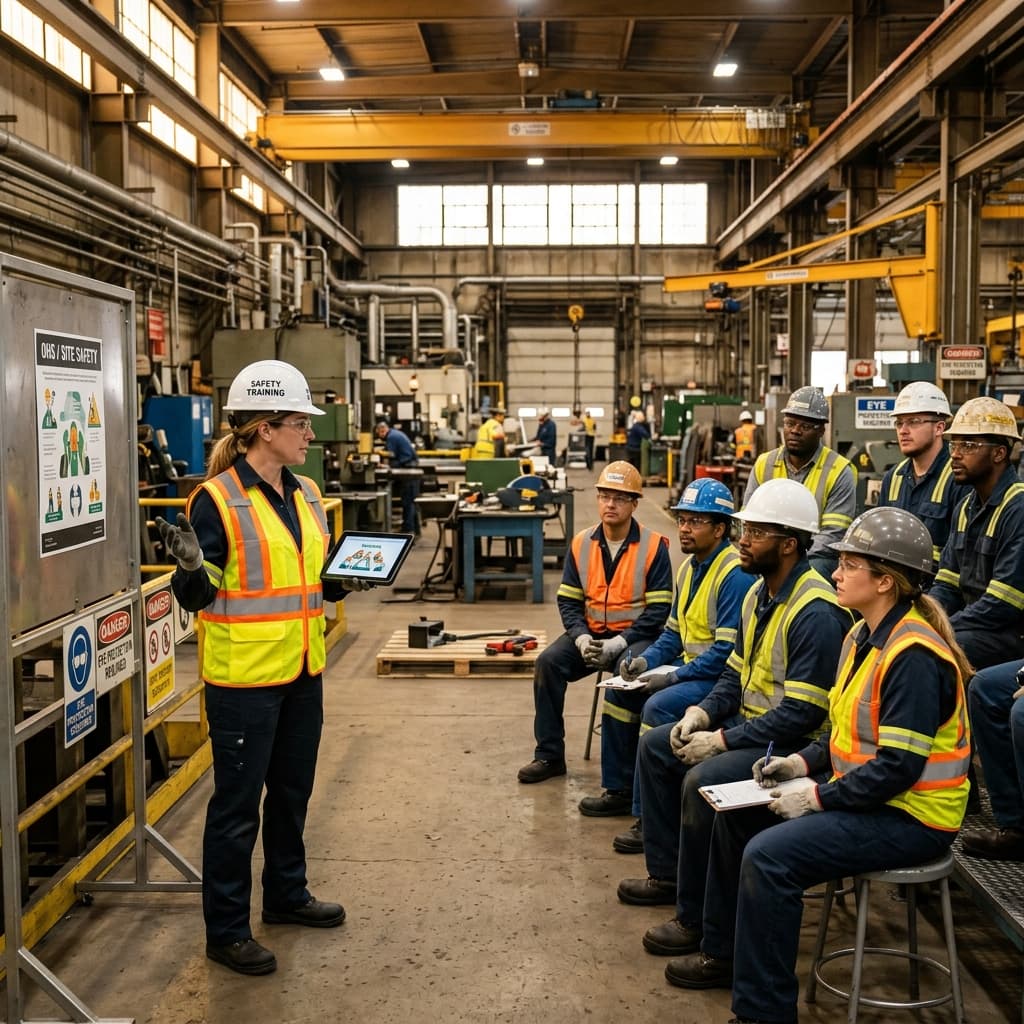
Onsite Safety Training Session
Practical Training. Proven Safety.
BHG Heavy Equipment delivers no-nonsense, on-site heavy equipment training that fits how your crews actually work. We combine OSHA-compliant curriculum with real machines and real jobsite scenarios so operators leave confident, competent, and certified.
From single-day refreshers to full new-hire onboarding, we tailor each session to your equipment, hazards, and production goals. You get fewer incidents, faster ramp-ups, and clean documentation for compliance audits.
- On-site, hands-on instruction
- OSHA 1910/1926 compliant curriculum
- Practical evaluations on your equipment
- Tailored to your tasks & hazards
Get in Contact with us Here!
Fill out the form below and we'll be in touch within one business day.