Heavy Equipment Operator Training in Louisville, Kentucky
Heavy equipment operator training for Louisville crews on KYTC bridge jobs, MSD sewer and floodwall projects and site work across Jefferson County, taught at your site on your machines.
- OSHA-Aligned Training
- Onsite at Your Job Site
- Hands-On, on Your Machines
- No Long-Term Contracts
Heavy Equipment Work in Louisville
A lot of Louisville's heavy equipment work is about rebuilding what the city already has. The Kentucky Transportation Cabinet is replacing or rehabilitating nine bridges on the I-65 Central Corridor between the Watterson Expressway and downtown. Louisville MSD is building a new Paddy's Run Flood Pump Station on the Ohio River, and its 20-year Critical Repair and Reinvestment Plan puts the cost of fixing the county's wastewater, stormwater and flood protection systems at $4.3 billion. Some of the sewers involved date back to the Civil War era.
Those jobs put excavators and backhoes in trenches near old utilities, and loaders, graders and dump trucks next to live traffic and floodwall structures. BHG Heavy Equipment trains operators for that work at your job site or yard, on the machines they run every day. Courses combine classroom instruction with hands-on operation, pre-shift inspections and the OSHA rules for each machine, and each operator is evaluated on the machine.
BHG is a Disabled Veteran-Owned company based in Hannibal, Missouri, and travels to clients across 17 states. Kentucky runs its own state plan, so Kentucky OSH, not federal OSHA, inspects most private job sites in Louisville. Crews that also work in Jeffersonville, Clarksville or New Albany answer to Indiana's state plan and Indiana 811 on that side of the river.
Where Heavy Equipment Works in Louisville
Interstate bridge replacement (I-65 Central Corridor)
KYTC is replacing or rehabilitating nine bridges on a five-mile stretch of I-65 between I-264 and downtown, with the first three, over Kentucky/Brook Street, Hill Street/CSX and Bradley Avenue, due to be finished in March 2027. Loaders, dump trucks and excavators work inside barrier walls beside four lanes of traffic, so struck-by, backing and work-zone hazards come with every shift.
Flood protection (Ohio River floodwall and pump stations)
MSD runs 26.1 miles of floodwall and earthen levee and 16 flood pumping stations, and is building a roughly $230 million replacement for the 1953 Paddy's Run Flood Pump Station where Bells Lane meets the river, due in 2027. Deep excavations, dewatering and equipment working on levee slopes bring cave-in, rollover and drop-off hazards.
Sewer and stormwater rehabilitation
MSD maintains more than 3,300 miles of sewer lines, and its Critical Repair and Reinvestment Plan includes almost $500 million to finish the remaining federal Consent Decree projects on sewer overflows. Trenching for sewer and storm lines puts backhoes and excavators next to cave-in hazards and buried gas, water, electric and fiber lines.
What Shapes Equipment Work in Louisville
The Kentucky Geological Survey notes that Louisville is partly underlain by karst, with karst geology in the eastern and central parts of Jefferson County and river sediments near the Ohio. Sinkholes and soft ground over solution channels can show up during grading or trenching, so operators should know how to stop and report ground that settles or opens up.
The KGS also points to shale slopes along the Muldraugh Escarpment near the Gene Snyder Freeway, where drains and riprap are used to keep water out and slopes stable. Dozers and loaders working cut slopes in that area face rollover and slide hazards.
Inside the tolerance zone around a marked utility, KRS 367.4911(10) requires hand digging or non-intrusive methods, with limited exceptions for mechanized equipment that require a second person, not the operator, to watch the excavation. Excavator and backhoe operators need to know that rule before they dig near marks.
Kentucky's state plan covers private employers here. Under House Bill 398 (2025 Ky. Acts ch. 105, amending KRS 338.062), Kentucky OSH may not adopt or enforce a private-sector rule that federal OSHA has not issued or that is stricter than the federal version, so the federal construction rules for earthmoving equipment and excavations set the bar.
Operator Courses for Louisville Job Sites
All courses- Excavator TrainingComprehensive instruction on machine stability, deep excavation safety, trenching, rigging, and precision attachment controls.
- Backhoe TrainingMaster safe operation, digging, trenching, and backfilling techniques with hands-on practice and complete OSHA compliance evaluations.
- Front End Loader TrainingGet certified in material handling, stockpile management, ramp operations, load-and-carry safety, and bucket controls.
- Dump Truck TrainingCovers pre-trip inspections, safe hauling, backing maneuvers, dump procedures on unstable ground, and road transit safety.
Louisville Equipment Training Questions
We get a lot of the same great questions from new clients. Here are the answers to the ones we hear most often — if yours isn't listed, don't hesitate to reach out directly.
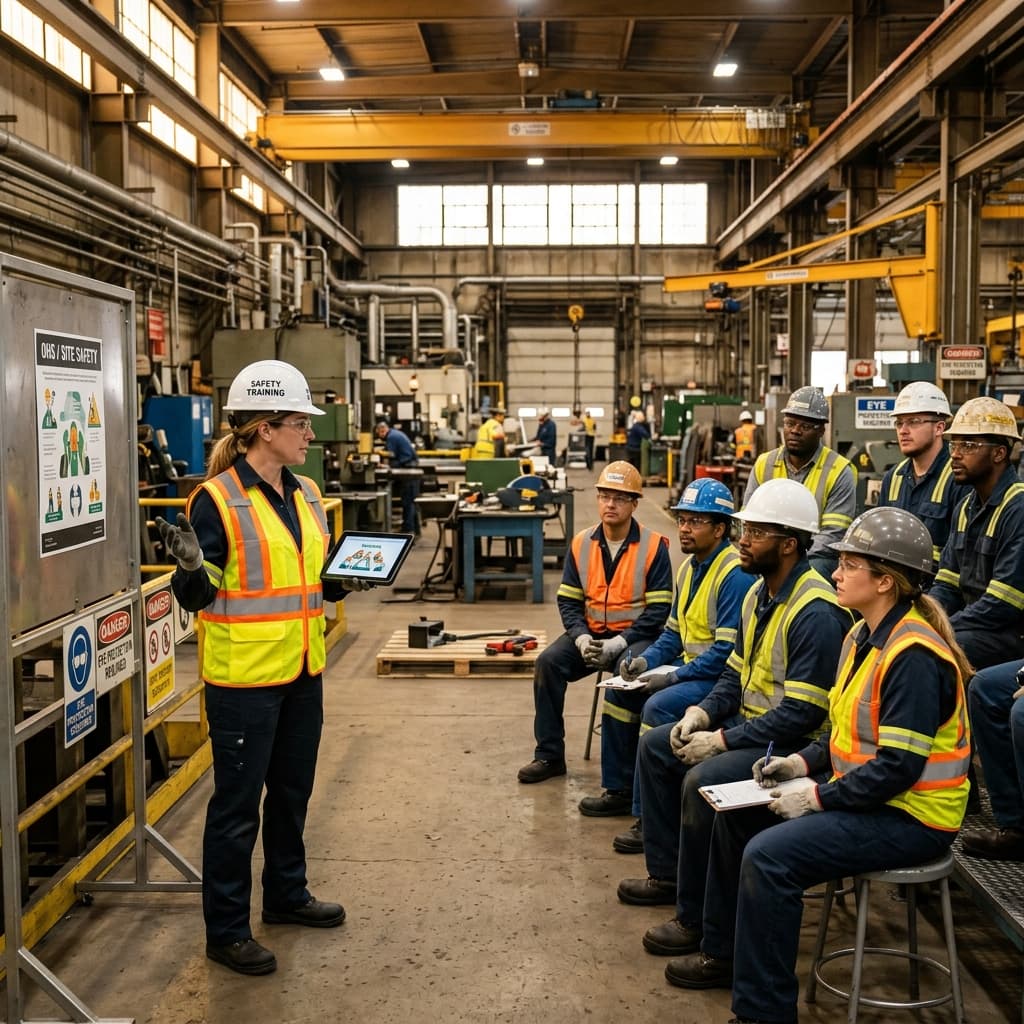
Onsite Safety Training Session
Practical Training. Proven Safety.
BHG Heavy Equipment delivers no-nonsense, on-site heavy equipment training that fits how your crews actually work. We combine OSHA-compliant curriculum with real machines and real jobsite scenarios so operators leave confident, competent, and certified.
From single-day refreshers to full new-hire onboarding, we tailor each session to your equipment, hazards, and production goals. You get fewer incidents, faster ramp-ups, and clean documentation for compliance audits.
- On-site, hands-on instruction
- OSHA 1910/1926 compliant curriculum
- Practical evaluations on your equipment
- Tailored to your tasks & hazards
Get in Contact with us Here!
Fill out the form below and we'll be in touch within one business day.