Heavy Equipment Operator Training in Wichita, Kansas
Operator training for Wichita crews rebuilding Kellogg, grading levees along the Big Ditch and digging city utility lines, taught at your yard or job site on your own machines.
- OSHA-Aligned Training
- Onsite at Your Job Site
- Hands-On, on Your Machines
- No Long-Term Contracts
Heavy Equipment Work in Wichita
On East Kellogg, KDOT began construction on March 23, 2026 on a project of almost $288 million that rebuilds U.S. 54 from K-96 to east of 159th Street as a six-lane, grade-separated, controlled-access road, with 26 bridge replacements, 32 new retaining walls and two-lane frontage roads. The first work was grading and site preparation, and completion is anticipated in 2029.
Wichita also lives behind levees. The Wichita-Valley Center Flood Control Project, known locally as the Big Ditch, includes 40.9 miles of channels and 97 miles of levees, and its maintenance covers mowing, grading levees and roadways, repairing erosion and stabilizing banks. That is equipment work on slopes and embankments, where rollovers are the hazard that matters most.
BHG Heavy Equipment, a Disabled Veteran-Owned company based in Hannibal, Missouri, travels to Wichita-area yards and job sites to train operators on the machines they already run. Each course combines classroom instruction with hands-on operation, pre-shift inspections and the OSHA rules for that equipment, and every operator is evaluated on the machine.
Where Heavy Equipment Works in Wichita
Highway reconstruction
KDOT's East Kellogg project from K-96 to 159th Street East involves grading, bridge replacements and retaining walls while traffic keeps moving. Operators work in traffic work zones, around crews on foot, and next to excavations for walls and bridge footings.
Levee and flood control maintenance
The City of Wichita and Sedgwick County share the cost of maintaining the Wichita-Valley Center Flood Control Project to U.S. Army Corps of Engineers standards, including levee grading, erosion repair and bank stabilization. Dozers, loaders and mowers on levee side slopes face rollover risk, and bank work near the channel adds soft ground and water.
City water, sewer and street work
The City of Wichita publishes a weekly list of construction and maintenance projects on its streets and utilities. Trenching for water and sewer lines brings cave-in and utility-strike hazards, and street jobs add backing trucks and work zones next to traffic.
What Shapes Equipment Work in Wichita
Kansas does not run an OSHA State Plan for private employers, so Wichita contractors fall under federal OSHA and the construction standards in 29 CFR 1926.
Under K.S.A. 66-1804, a Kansas locate notice is valid for 20 calendar days after the excavation start date and should only cover an area the crew can reasonably finish in that time. Longer jobs need updated notices. The Kansas Corporation Commission enforces the state's damage prevention act.
The National Weather Service office in Wichita reports that Kansas averages 81 tornadoes a year, with about 74% of them from April through June. Crews working on open grades and levees need a plan to shut down and take shelter when a warning is issued.
Operator Courses for Wichita Job Sites
All courses- Bulldozer TrainingLearn advanced grading, slot dozing, and land clearing operations alongside safety protocols for handling heavy loads and slopes.
- Excavator TrainingComprehensive instruction on machine stability, deep excavation safety, trenching, rigging, and precision attachment controls.
- Grader TrainingAdvanced training in grading techniques, leveling, ditching, slope maintenance, and high-precision blade configuration safety.
- Front End Loader TrainingGet certified in material handling, stockpile management, ramp operations, load-and-carry safety, and bucket controls.
Wichita Equipment Training Questions
We get a lot of the same great questions from new clients. Here are the answers to the ones we hear most often — if yours isn't listed, don't hesitate to reach out directly.
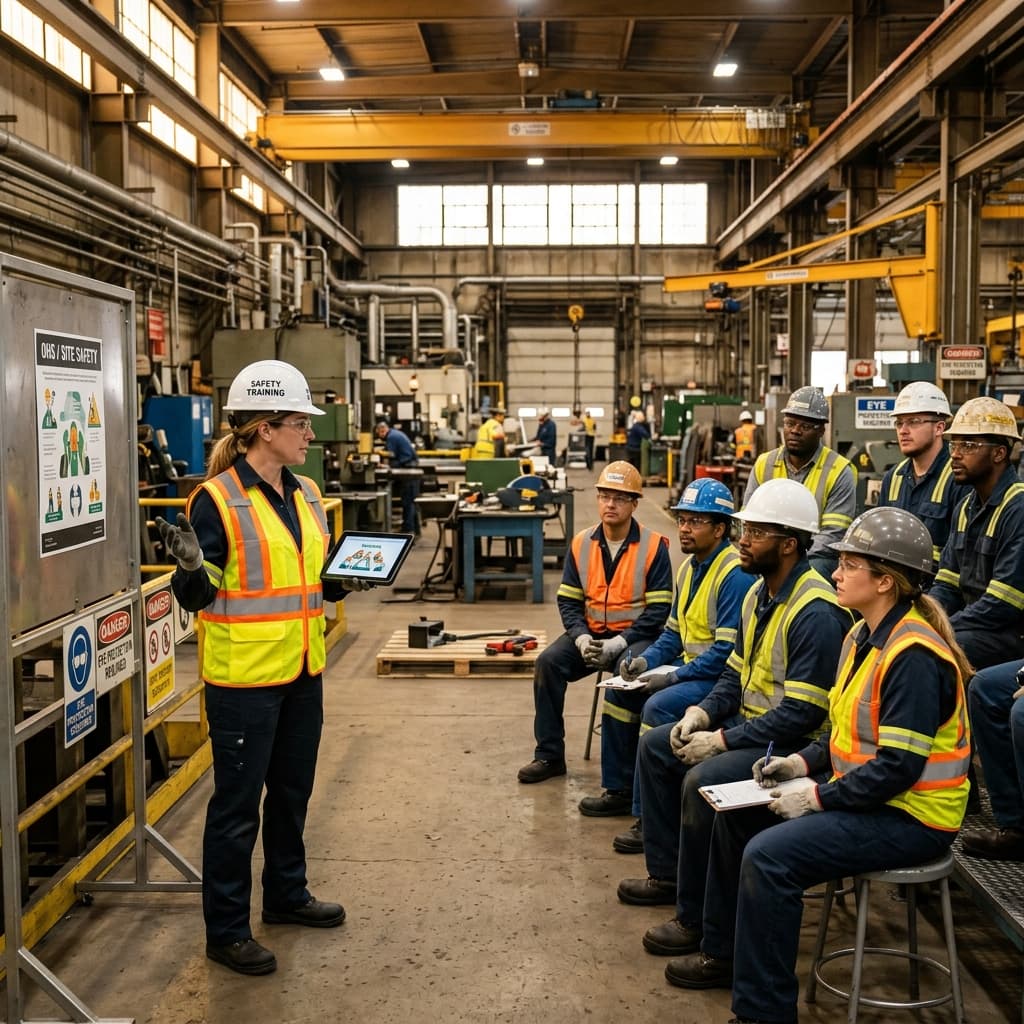
Onsite Safety Training Session
Practical Training. Proven Safety.
BHG Heavy Equipment delivers no-nonsense, on-site heavy equipment training that fits how your crews actually work. We combine OSHA-compliant curriculum with real machines and real jobsite scenarios so operators leave confident, competent, and certified.
From single-day refreshers to full new-hire onboarding, we tailor each session to your equipment, hazards, and production goals. You get fewer incidents, faster ramp-ups, and clean documentation for compliance audits.
- On-site, hands-on instruction
- OSHA 1910/1926 compliant curriculum
- Practical evaluations on your equipment
- Tailored to your tasks & hazards
Get in Contact with us Here!
Fill out the form below and we'll be in touch within one business day.