Heavy Equipment Operator Training in Des Moines, Iowa
Heavy equipment operator training at your Des Moines job site or yard, on your own machines, for crews working the metro's interstate, levee and site development jobs.
- OSHA-Aligned Training
- Onsite at Your Job Site
- Hands-On, on Your Machines
- No Long-Term Contracts
Heavy Equipment Work in Des Moines
Des Moines has a steady run of public earthwork. The Iowa DOT expects to start rebuilding the Southwest Mixmaster, where I-35/80 meets I-235 on the west side of the metro, in late 2026, with new flyover bridges and work staged through 2029. Along the Des Moines and Raccoon rivers, the City's Levee Alterations Program is raising levees and floodwalls and rebuilding closure structures and storm sewers in phases, with the next combined phase scheduled for 2028–2029. That work puts excavators, dozers, loaders and haul trucks next to live traffic, open trenches and buried utilities.
Most private employers in Des Moines answer to Iowa OSHA, the state plan run by the Division of Labor in the Iowa Department of Inspections, Appeals, and Licensing, rather than federal OSHA. Iowa OSHA has adopted the federal construction standards, so the earthmoving rules in 29 CFR 1926.602 and the excavation rules in Subpart P apply here. Before any digging, Iowa Code 480.4 requires notice to Iowa One Call so utilities can be marked.
BHG Heavy Equipment is a Disabled Veteran-Owned company based in Hannibal, Missouri. We travel to your site in the Des Moines area and train operators on the machines they run every day: classroom instruction, pre-shift inspections, the OSHA rules for that equipment, and hands-on operation, with each operator evaluated on the machine. Call (573) 822-6448 to plan training for your crew.
Where Heavy Equipment Works in Des Moines
Interstate reconstruction
The Iowa DOT's Des Moines area interstate program includes the Southwest Mixmaster (I-35/80/235) rebuild, the Hickman Road interchange on I-80/35, widening I-80 in Dallas County and rebuilding I-35 from Ankeny to Huxley. Operators on these jobs work beside moving traffic, so struck-by risk, backing in tight work zones and dump truck traffic are the main concerns.
Levee and flood-risk work
The City of Des Moines Levee Alterations Program covers levee and floodwall raises, riprap placement, pump station and storm sewer work, and fixes for levee stability and seepage along the Des Moines and Raccoon rivers. Excavators and dozers working on embankments and near water face rollover on slopes and cave-ins in storm sewer trenches.
Data center and industrial site development
The Greater Des Moines Partnership reports that Apple, Meta and Microsoft have chosen the metro for data center operations. Building those campuses takes mass grading, long utility and duct-bank trenches, and heavy haul traffic, which brings trench cave-ins, utility strikes and backing incidents.
Municipal utility and street work
City and suburban public works crews in Polk and Dallas counties run backhoes and loaders for water main, sewer and street repairs, often in residential streets. Locating utilities before digging, shoring trenches and controlling traffic around the machine are daily issues.
What Shapes Equipment Work in Des Moines
The City of Des Moines lists a 42-inch frost depth for footings. Frozen ground slows winter excavation and adds wear on buckets and teeth, and spring thaw leaves soft, rutted haul roads and trench walls that need a closer look before work starts.
Des Moines sits at the southern end of the Des Moines Lobe, the landform left by the last glacier to reach Iowa. The Iowa Geological Survey describes compact glacial till, with sand and gravel outwash along the old meltwater routes and river valleys, so soil conditions can change across a single site and trench protection should be chosen for the soil actually exposed.
Iowa's one-call law expects the excavator to white-line the dig area with paint, flags or stakes when calling in the ticket, unless an exception applies, and a notice is valid for 25 calendar days. Long-running jobs need a new notice once that window closes.
Operator Courses for Des Moines Job Sites
All courses- Excavator TrainingComprehensive instruction on machine stability, deep excavation safety, trenching, rigging, and precision attachment controls.
- Front End Loader TrainingGet certified in material handling, stockpile management, ramp operations, load-and-carry safety, and bucket controls.
- Dump Truck TrainingCovers pre-trip inspections, safe hauling, backing maneuvers, dump procedures on unstable ground, and road transit safety.
- Bulldozer TrainingLearn advanced grading, slot dozing, and land clearing operations alongside safety protocols for handling heavy loads and slopes.
Des Moines Equipment Training Questions
We get a lot of the same great questions from new clients. Here are the answers to the ones we hear most often — if yours isn't listed, don't hesitate to reach out directly.
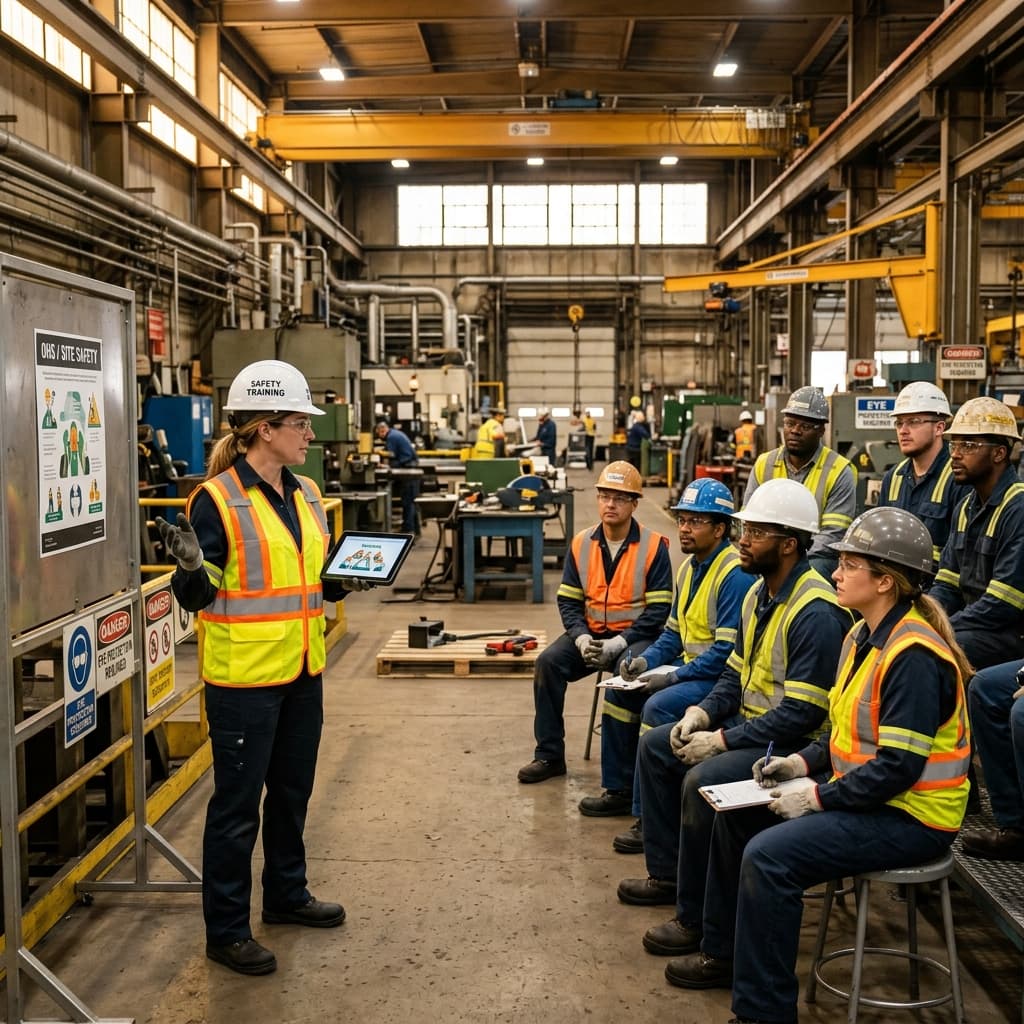
Onsite Safety Training Session
Practical Training. Proven Safety.
BHG Heavy Equipment delivers no-nonsense, on-site heavy equipment training that fits how your crews actually work. We combine OSHA-compliant curriculum with real machines and real jobsite scenarios so operators leave confident, competent, and certified.
From single-day refreshers to full new-hire onboarding, we tailor each session to your equipment, hazards, and production goals. You get fewer incidents, faster ramp-ups, and clean documentation for compliance audits.
- On-site, hands-on instruction
- OSHA 1910/1926 compliant curriculum
- Practical evaluations on your equipment
- Tailored to your tasks & hazards
Get in Contact with us Here!
Fill out the form below and we'll be in touch within one business day.