Heavy Equipment Operator Training in Chicago, Illinois
Operator training for Chicago crews digging under city streets, building CREATE rail projects and moving bulk cargo at the Calumet River port, taught at your site on your own machines.
- OSHA-Aligned Training
- Onsite at Your Job Site
- Hands-On, on Your Machines
- No Long-Term Contracts
Heavy Equipment Work in Chicago
Much of Chicago's heavy equipment work is street excavation. The city's Department of Water Management maintains about 4,300 miles of water mains and 4,600 miles of sewer mains and runs several programs to replace the city's roughly 400,000 lead service lines. That means excavators and backhoes working in narrow trenches under busy streets, surrounded by gas, electric and telecom lines. Add the CREATE rail program's grade separations and flyovers, and the bulk terminals of the Illinois International Port District on the Southeast Side, and a Chicago operator may work very different sites from one month to the next.
Chicago also runs its own one-call system. Inside city limits, excavators notify 811 Chicago (DIGGER) instead of JULIE, which covers the rest of Illinois, so crews that move between the city and the suburbs need to know which center to call and what each one expects.
BHG Heavy Equipment, a Disabled Veteran-Owned company based in Hannibal, Missouri, travels to clients across 17 states. We train operators at your yard or job site on your own machines. Courses combine classroom instruction with hands-on operation, pre-shift inspections and the OSHA rules for each machine, and each operator is evaluated on the machine.
Where Heavy Equipment Works in Chicago
Water main, sewer and lead service line work
The Department of Water Management maintains about 4,300 miles of water mains and 4,600 miles of sewer mains and runs programs to replace about 400,000 lead service lines. Street trenching puts excavators and backhoes next to cave-in hazards, gas and electric lines, traffic and workers on foot.
Rail grade separations (CREATE Program)
CREATE is a partnership of U.S. DOT, the State of Illinois, Cook County, the City of Chicago, Metra, Amtrak and the freight railroads, with active projects such as the Westside Gateway/Ogden Junction and Pullman Junction. Earthmoving next to live track brings struck-by hazards from trains and equipment, deep excavations and tight haul routes.
Deep tunnels and reservoirs (TARP)
The MWRD's Tunnel and Reservoir Plan includes 110 miles of tunnels 150 to 300 feet underground, feeding the Thornton, McCook and Majewski reservoirs; McCook Reservoir in Bedford Park is being completed in two stages. Reservoir and shaft work involves large haul trucks, loaders and dozers on benches and ramps, with rollover and edge hazards.
Calumet River port terminals
The Illinois International Port District owns Iroquois Landing, with 3,000 feet of ship and barge berths at the mouth of the Calumet River, and the Lake Calumet terminal, moving bulk commodities such as lumber and mineral aggregates. Loaders working stockpiles and dock edges face struck-by, rollover and drop-off hazards.
What Shapes Equipment Work in Chicago
Private employers in Chicago are under federal OSHA. The Illinois state plan (IL OSHA) covers only state and local government workers, so a city department's own crews fall under IL OSHA while a private contractor on the same street falls under federal OSHA.
CDOT's excavator rules call for marking the dig area in white paint before calling DIGGER (black paint in snow) and for requesting refreshed marks no later than 28 calendar days after the last request.
Illinois amended its dig law in 2026. JULIE says locate tickets outside Chicago are now valid for 25 days, with extensions allowed between day 20 and day 25, and that excavators must confirm through JULIE's positive response system that every utility has responded before digging.
Operator Courses for Chicago Job Sites
All courses- Excavator TrainingComprehensive instruction on machine stability, deep excavation safety, trenching, rigging, and precision attachment controls.
- Backhoe TrainingMaster safe operation, digging, trenching, and backfilling techniques with hands-on practice and complete OSHA compliance evaluations.
- Front End Loader TrainingGet certified in material handling, stockpile management, ramp operations, load-and-carry safety, and bucket controls.
- Dump Truck TrainingCovers pre-trip inspections, safe hauling, backing maneuvers, dump procedures on unstable ground, and road transit safety.
Chicago Equipment Training Questions
We get a lot of the same great questions from new clients. Here are the answers to the ones we hear most often — if yours isn't listed, don't hesitate to reach out directly.
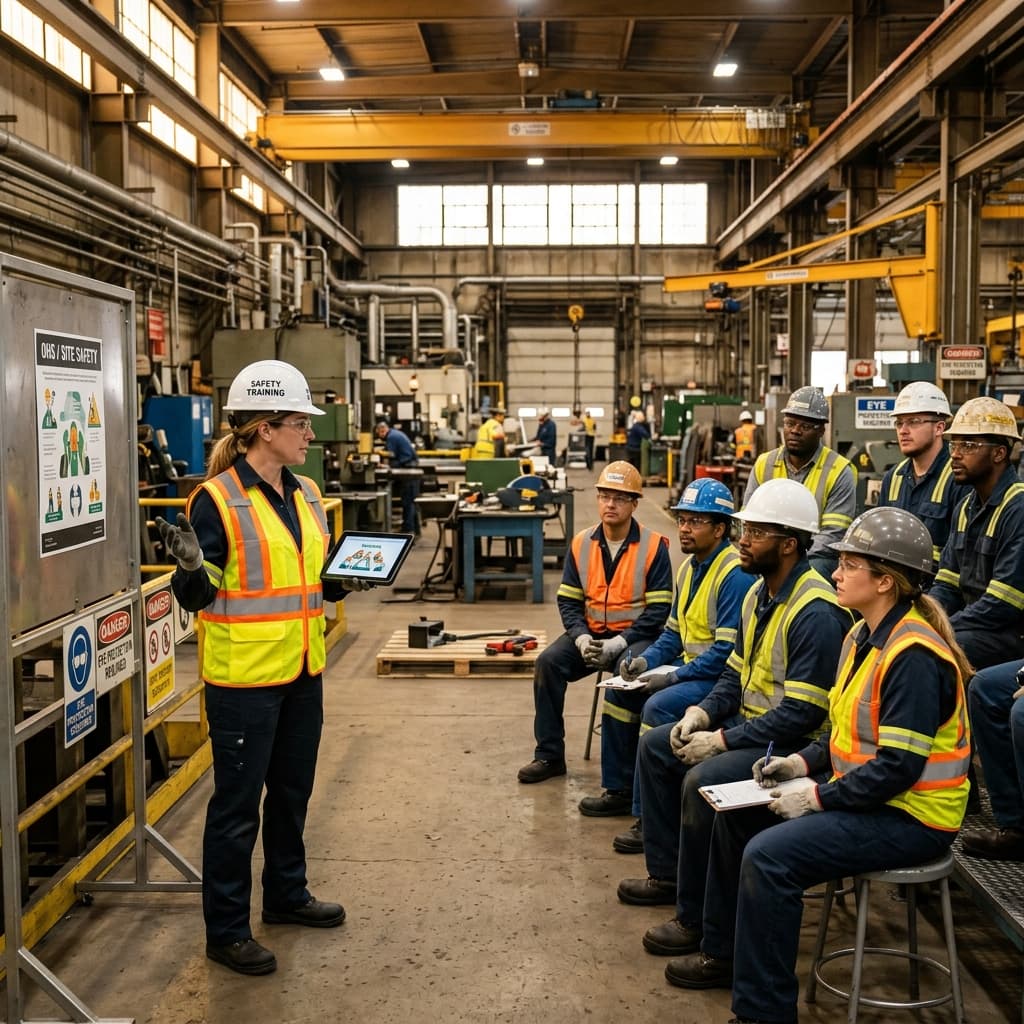
Onsite Safety Training Session
Practical Training. Proven Safety.
BHG Heavy Equipment delivers no-nonsense, on-site heavy equipment training that fits how your crews actually work. We combine OSHA-compliant curriculum with real machines and real jobsite scenarios so operators leave confident, competent, and certified.
From single-day refreshers to full new-hire onboarding, we tailor each session to your equipment, hazards, and production goals. You get fewer incidents, faster ramp-ups, and clean documentation for compliance audits.
- On-site, hands-on instruction
- OSHA 1910/1926 compliant curriculum
- Practical evaluations on your equipment
- Tailored to your tasks & hazards
Get in Contact with us Here!
Fill out the form below and we'll be in touch within one business day.