Heavy Equipment Operator Training in Little Rock, Arkansas
Heavy equipment operator training for Little Rock crews on industrial sites at the Port of Little Rock, interstate work and Arkansas River jobs, taught at your site on your machines.
- OSHA-Aligned Training
- Onsite at Your Job Site
- Hands-On, on Your Machines
- No Long-Term Contracts
Heavy Equipment Work in Little Rock
Little Rock's heavy equipment work follows the Arkansas River and the interstates that cross it. The Port of Little Rock runs a 4,000-acre industrial park on the river, with its own switching railroad on about 20 miles of track, and it markets open industrial sites such as 150 acres on Thibault Road and 90 acres on Zeuber Road. ARDOT's 30 Crossing project rebuilt 4.7 miles of I-30 and I-40 through Little Rock and North Little Rock, including the Arkansas River bridge, and finished its first phase in November 2024, with the remaining portions planned for future phases.
Site development, highway work and river terminals put dozers and loaders on fresh fill and stockpiles, excavators in trenches for new utilities, and dump trucks backing through busy sites. BHG Heavy Equipment trains operators for that work at your job site or yard, on the machines they run every day. Courses combine classroom instruction with hands-on operation, pre-shift inspections and the OSHA rules for each machine, and each operator is evaluated on the machine.
BHG is a Disabled Veteran-Owned company based in Hannibal, Missouri, and travels to clients across 17 states. Arkansas has no state OSHA plan for private employers, so federal OSHA's Little Rock Area Office on East Capitol Avenue covers job sites in every county in the state. Before digging, Arkansas law requires a locate request through Arkansas 811.
Where Heavy Equipment Works in Little Rock
Industrial site development (Port of Little Rock)
The Port of Little Rock's 4,000-acre industrial park includes open sites from under 10 acres to 150 acres, a river terminal and a switching railroad that connects plants to Union Pacific and BNSF. Dozers, loaders and scrapers grading pads next to rail spurs and truck traffic face rollover, struck-by and backing hazards.
Highway and bridge construction
ARDOT's 30 Crossing project reconstructed the I-30 corridor from I-630 to I-40, including the Arkansas River bridge, and ARDOT says the rest of the corridor will be built in future phases. Loaders, graders and dump trucks working beside interstate traffic face struck-by and work-zone hazards.
River terminals and navigation (McClellan-Kerr system)
The port's docks sit on the McClellan-Kerr Arkansas River Navigation System, which runs 445 miles with 18 locks and dams from the Mississippi River toward Tulsa. Loaders and dozers moving bulk material at dock edges and on stockpiles face drop-off into the water, rollover and struck-by hazards.
What Shapes Equipment Work in Little Rock
Arkansas has no OSHA-approved state plan for private employers, so federal OSHA rules apply directly, including 29 CFR 1926.602 for earthmoving equipment and 29 CFR 1926 Subpart P for excavations.
Arkansas law has specific rules for machines near marked lines. Under Ark. Code Ann. § 14-271-110(a)(5), mechanized equipment may not be used within the approximate location of a facility without the operator's express approval, and the excavator must confirm through Arkansas 811's positive response system that every utility has responded before digging. The 2023 amendments added civil penalties and mandatory damage-prevention training for violators (§ 14-271-104).
Little Rock sits where the eroded Ouachita Mountains to the west meet the Mississippi River Alluvial Plain to the east and the West Gulf Coastal Plain to the south, according to NASA. The Arkansas Geological Survey describes that boundary as a fall line between resistant Paleozoic rock and unconsolidated sediments, so ground conditions can change from rock to loose soil across one metro area.
The Arkansas River flooded in late May and early June 2019. The National Weather Service in Little Rock reported homes flooding near Two Rivers Park, about eight miles northwest of the city, and levees at risk of overtopping from Little Rock to Pine Bluff. Low-lying yards and access roads near the river need a high-water plan for equipment.
Operator Courses for Little Rock Job Sites
All courses- Bulldozer TrainingLearn advanced grading, slot dozing, and land clearing operations alongside safety protocols for handling heavy loads and slopes.
- Excavator TrainingComprehensive instruction on machine stability, deep excavation safety, trenching, rigging, and precision attachment controls.
- Front End Loader TrainingGet certified in material handling, stockpile management, ramp operations, load-and-carry safety, and bucket controls.
- Dump Truck TrainingCovers pre-trip inspections, safe hauling, backing maneuvers, dump procedures on unstable ground, and road transit safety.
Little Rock Equipment Training Questions
We get a lot of the same great questions from new clients. Here are the answers to the ones we hear most often — if yours isn't listed, don't hesitate to reach out directly.
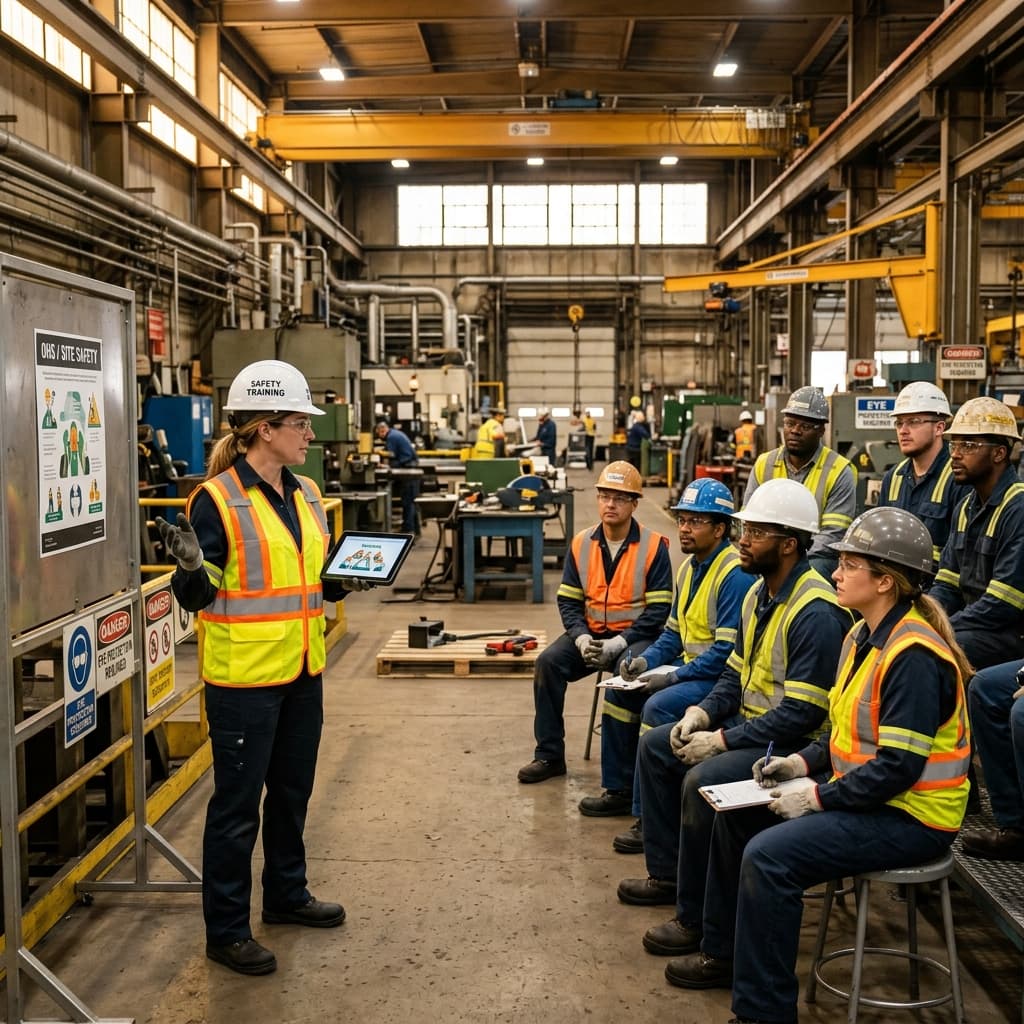
Onsite Safety Training Session
Practical Training. Proven Safety.
BHG Heavy Equipment delivers no-nonsense, on-site heavy equipment training that fits how your crews actually work. We combine OSHA-compliant curriculum with real machines and real jobsite scenarios so operators leave confident, competent, and certified.
From single-day refreshers to full new-hire onboarding, we tailor each session to your equipment, hazards, and production goals. You get fewer incidents, faster ramp-ups, and clean documentation for compliance audits.
- On-site, hands-on instruction
- OSHA 1910/1926 compliant curriculum
- Practical evaluations on your equipment
- Tailored to your tasks & hazards
Get in Contact with us Here!
Fill out the form below and we'll be in touch within one business day.